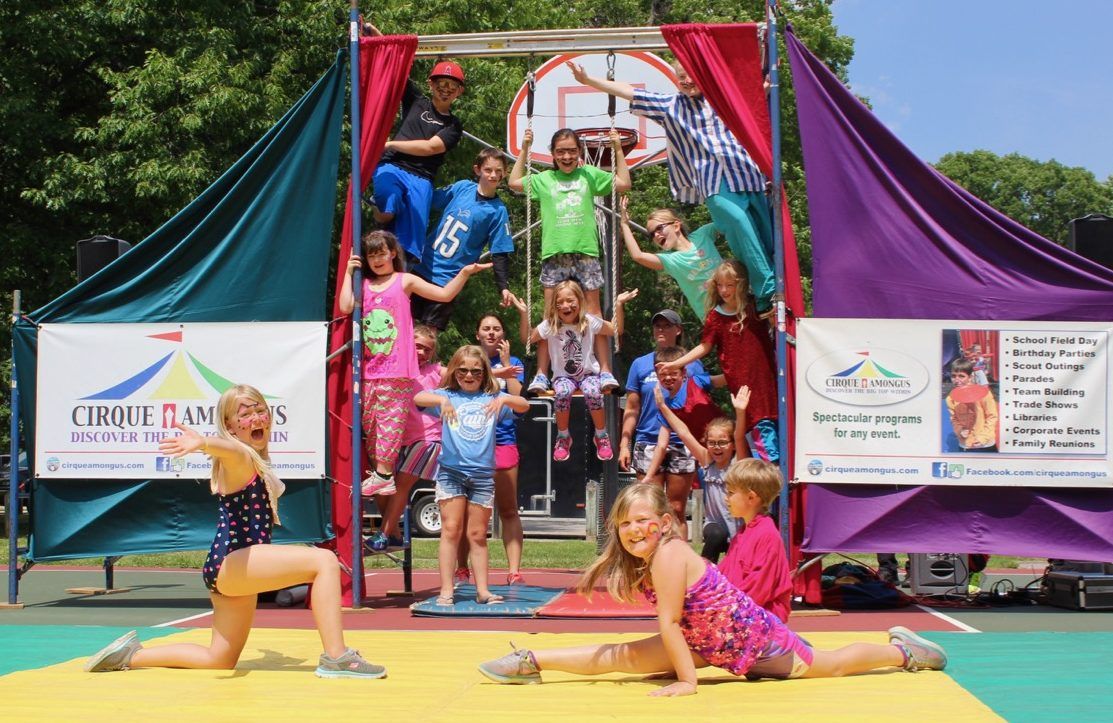
Circus Day at School
How a Circus Day works
From the first planning call to the final bow — a detailed walkthrough of the whole project.
1. Leading up to the day
The school assigns an advance person — our single point of contact who coordinates the recruitment of volunteers and supplies us with student lists, volunteer and faculty lists, school maps, lunch schedules and other logistics.
- 22 adult volunteers are needed to run every circuit of stations.
- Each circuit accommodates 100–120 students; larger schools run multiple circuits.
- We split the students into multi-age groups and ask the school to suggest any changes that will help the day run smoothly.
The whole school typically prepares for weeks in advance — circus themes woven into reading, history and social studies, and the halls decorated with the students' circus artwork. The buzz before the day is half the fun.
2. The evening before
All participating adults attend an instruction meeting the evening before. Parents and teachers get an overview of the day and detailed instructions through an entertaining demonstration of the different circus skills, and hands-on time with the equipment. At the end of the meeting volunteers choose their preferred task for the next day — or embrace fate and draw a random one.
3. Morning — the skills circuit
We provide name tags for every student and adult, and every adult gets a task sheet outlining their day. Students start in their classrooms, where attendance is taken and badges handed out.
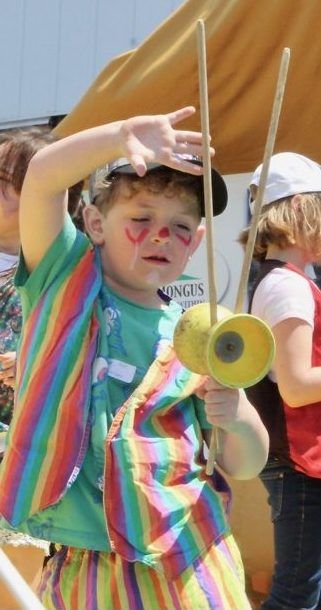
The morning is spent rotating through a circuit of ten circus skill stations in small multi-age groups — about 10 minutes of hands-on instruction at each. Students are encouraged to invent their own creative ways of using the props at every station.
- Every group has an adult group leader who stays with it the whole morning, guiding it from station to station and helping with instruction.
- Every station has an adult station boss who teaches the skill and oversees safety.
- Stations set up wherever the building allows: classrooms, hallways, the gym, even outside.
- The office can locate any student or adult at any moment from the roster we set up.
4. Afternoon — building the acts
After lunch each student chooses one of the ten skills to perform in the show. Name tags are scanned, and we produce a printed show program with photos taken during the day, listing every act and the students in it — a keepsake families hold on to.
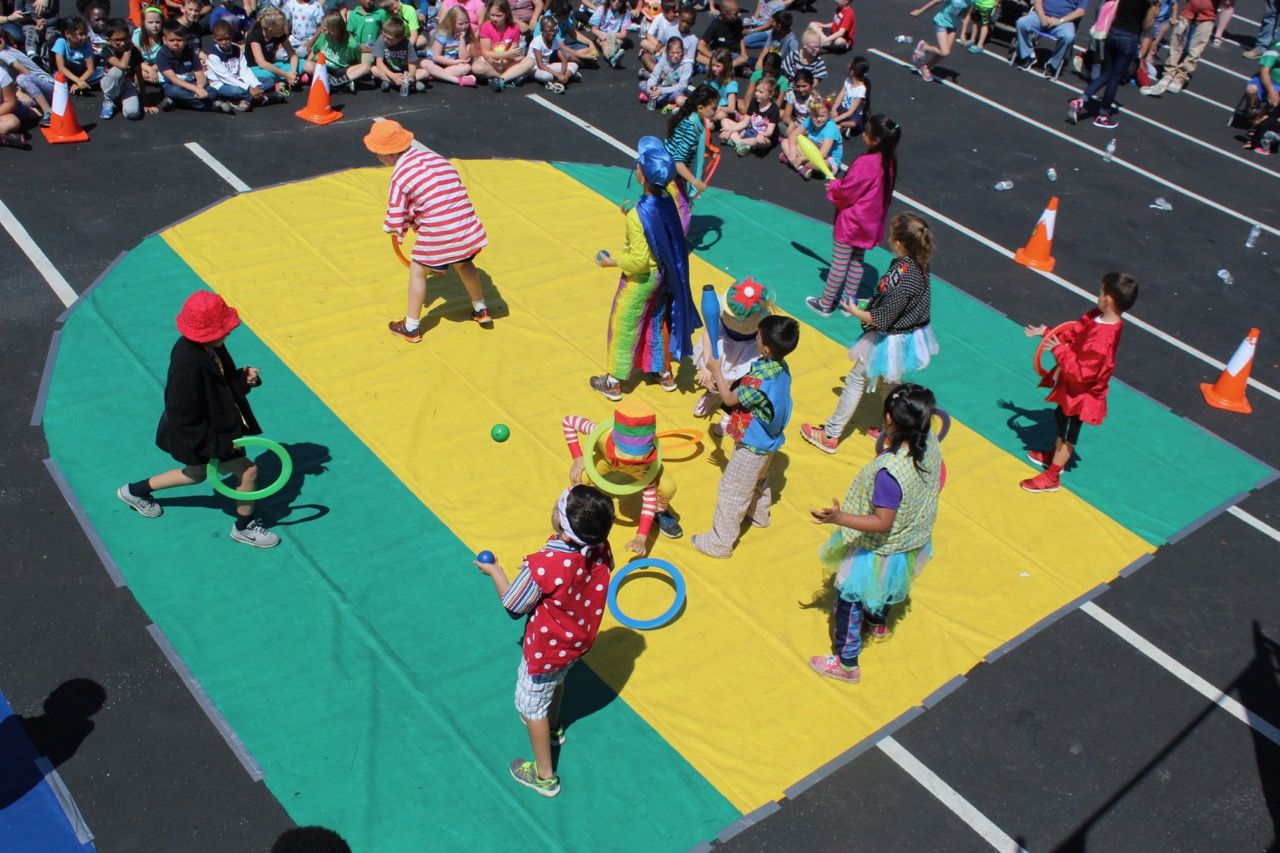
In groups of about 12, supervised by a station boss, the students spend the next 90 minutes rehearsing and writing a 3-minute act for the big show. The acts are built with the students' own input and cooperation — they are the choreographers. Meanwhile the group leaders help everyone get costumed and made up.
Kindergartners get their own path: they become the actors in the animal acts, returning to their classrooms after lunch to rest and rehearse.
5. The performance
The day culminates in an hour-long show, usually in the schoolyard — a 1, 2 or 3-ring circus depending on the size of the school, made up of the 3-minute acts the students created and presented by student ringmasters.
If the weather doesn't cooperate, the show moves indoors, spread over different areas as space allows — with lookup lists so every visitor can find their child's performing location. Family and friends are welcome, and they'll be talking about it for a long time.
What the school provides — and what we bring
You: about 2 adults for every 10 students (teachers plus parent volunteers), all attending the orientation meeting the evening before.
Us: two or more professional instructors, and every piece of show equipment, stage equipment, sound system, costumes and make-up.